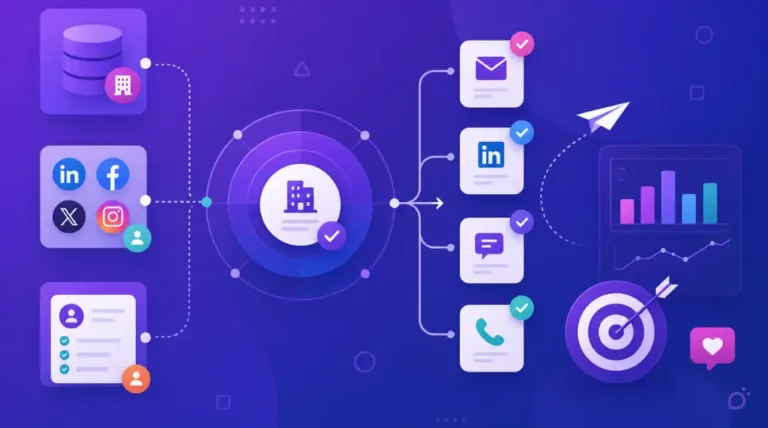
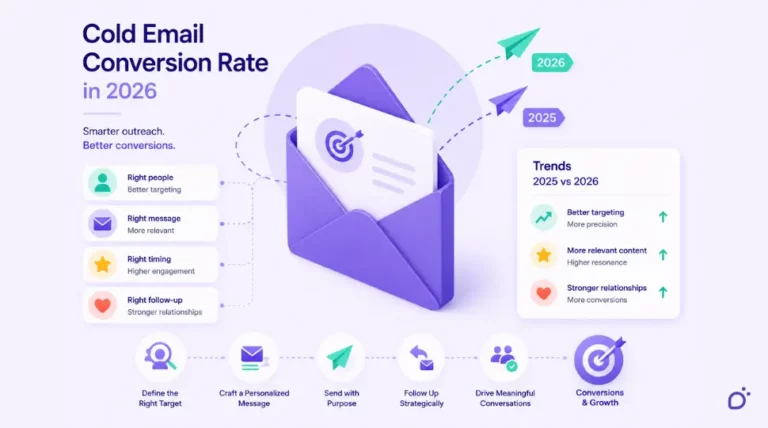
The best strategy is not lead generation vs database – it’s both. Use Bancomail to quickly activate large volumes of segmented prospects, then rely on lead generation to build long-term relationships. If speed and market entry matter, databases accelerate pipeline, while nurturing (automation, segmentation, A/B testing) converts contacts into opportunities.
Lead generation or ready-made database? When does it make sense to buy lists
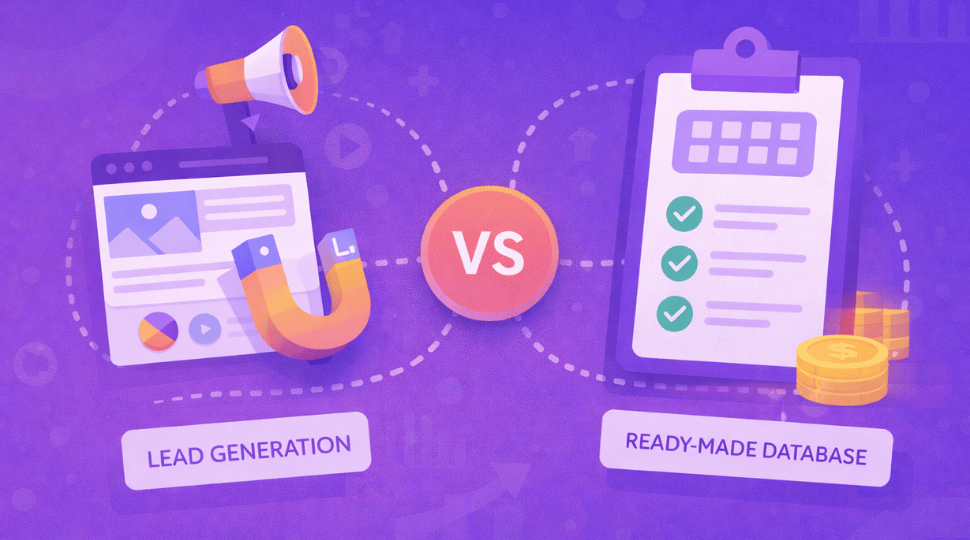
In B2B, the question comes up often: is it better to generate contacts in-house or to purchase an already profiled database?
Many companies invest in internal lead generation (content, advertising, webinars, inbound marketing) to build relationships over time. Others choose to access segmented B2B databases to quickly activate new commercial conversations.
In reality, this is not a rigid choice between two opposing models. In most cases, the most effective strategies combine both approaches.
To understand when to use one or the other, here are 5 key factors to consider.
1. Time: how quickly do you need new contacts?
The first factor is the speed at which the company needs to generate business opportunities.
Internal lead generation allows you to build relationships progressively: contacts come in because they are interested in a piece of content, a webinar, or a value proposition.
This makes the process more natural and often more qualified, but it requires time and consistency.
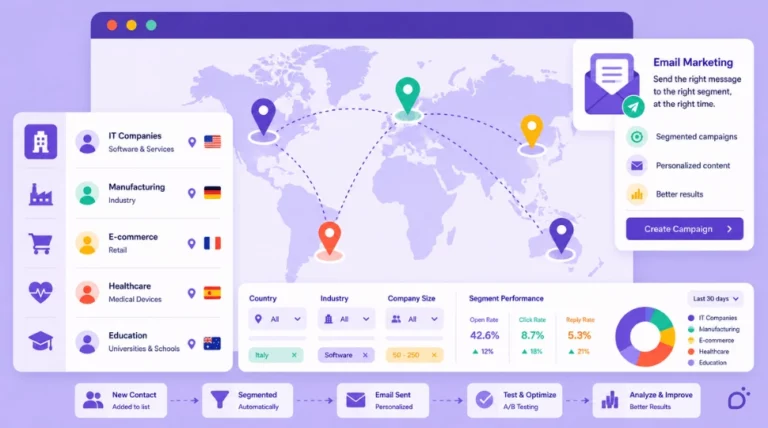
A profiled B2B database, on the other hand, allows you to activate outreach activities immediately toward companies already segmented by industry, size, or niche.
For this reason, databases are often used when the goal is to:
- enter a new market quickly
- support a sales team with new prospects
- test a new product or service
In these cases, speed becomes a strategic factor.
Both models work, but they respond to different timing needs: gradual build-up vs immediate activation.
2. Volume: how many contacts do you really need?
The second factor concerns the required volume of contacts.
Internal lead generation tends to produce contacts progressively but often with higher engagement. It is ideal for medium- to long-term strategies.
A profiled database, instead, allows you to quickly access a large number of companies, already segmented by:
- industry
- services or niche
- company size
- geographic area
Here, the advantage is balanced:
- databases prioritize scale and reach
- lead generation prioritizes quality and initial relationship
3. Data quality: what really matters in a B2B database
When talking about B2B databases, one of the most important aspects is data quality.
With internal lead generation, contacts are collected directly. This provides a high level of control over data origin and interactions (downloads, opens, events).
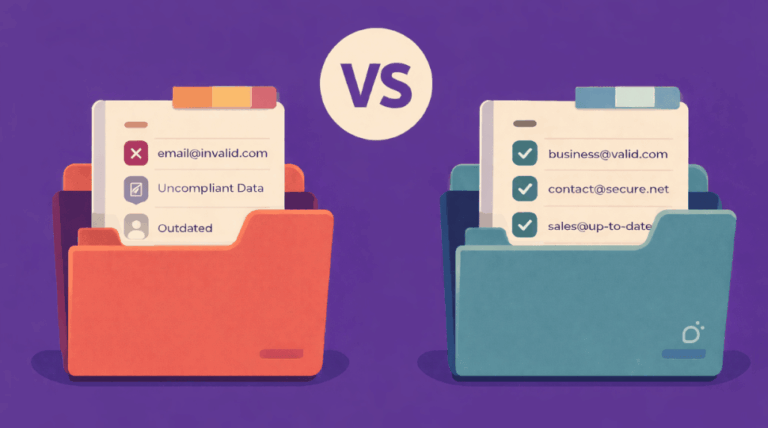
With B2B databases, quality depends on how the data is built and maintained, and not all databases are the same. It is essential to verify:
- data acquisition and update processes
- accuracy of company information
- compliance with data protection regulations
When these conditions are met, purchasing B2B databases becomes a valuable strategy to activate new conversations and expand the prospect base, especially in contexts where commercial speed matters.
Even here, there is no absolute superiority:
- lead generation offers direct control
- databases offer immediate access to structured data, if properly managed
4. Nurturing: what happens after the first contact?
Regardless of how it is acquired, a contact only has value if it is nurtured over time.
This is where many strategies make the difference.
Whether the contact comes from an inbound campaign or a database, the key step is always the same: turning a first touchpoint into an ongoing relationship.
Advanced email marketing tools become central here. Platforms like MailSenpai make it possible to turn an initial contact into a structured communication journey.
Among the most useful features in this phase:
- advanced contact segmentation
- nurturing automations
- A/B testing on messages
- performance analysis and recipient behavior tracking
This approach enables you to build a progressive dialogue: instead of relying on a single message, you can guide the prospect with relevant content, updates, and event invitations.
The result is a more sustainable process over time, where marketing and sales work together to turn initial contacts into real opportunities.
5. Strategy: when should you buy a database vs generate leads?
In practice, the choice is not “either/or”: a hybrid model often works best.
A typical approach looks like this:
- use segmented databases to activate new opportunities
- capture signals of interest
- place contacts into structured nurturing workflows
At the same time, lead generation continues to build a proprietary database over time.
The result is a more balanced system:
- databases accelerate
- lead generation consolidates
- nurturing transforms
In summary
Internal lead generation and B2B databases are not opposing alternatives, but two levers within the same process.
- Lead generation helps build trust and authority over time
- Profiled databases help accelerate commercial activation and reach new markets
The ultimate goal is not choosing one over the other, but building a coherent system where marketing and sales work together to turn contacts into long-term relationships.

Francesca Grillo
With a hybrid background in visual design, marketing, and product management, Francesca works at Bancomail as Project Manager and Product Owner, leading digital development and lead generation strategies. For over 15 years, she has operated in both B2B and B2C contexts, focusing on email marketing, process optimization, and customer experience. She is part of Bancomail’s internal B2B Marketing Board and actively contributes to the growth of the company’s ecosystem, with a sharp focus on data value and communication quality. Passionate about writing and nonprofit digital projects, she believes in blending technical vision with narrative sensitivity.