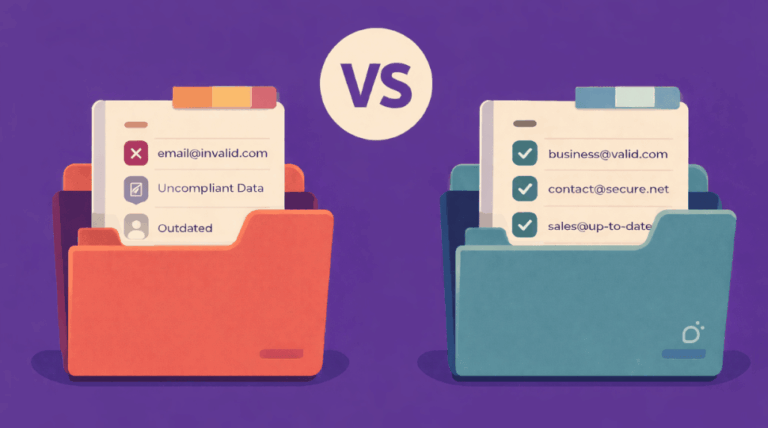
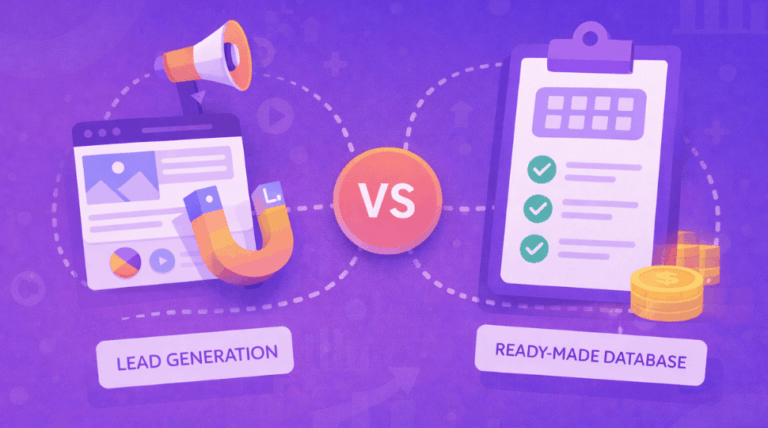
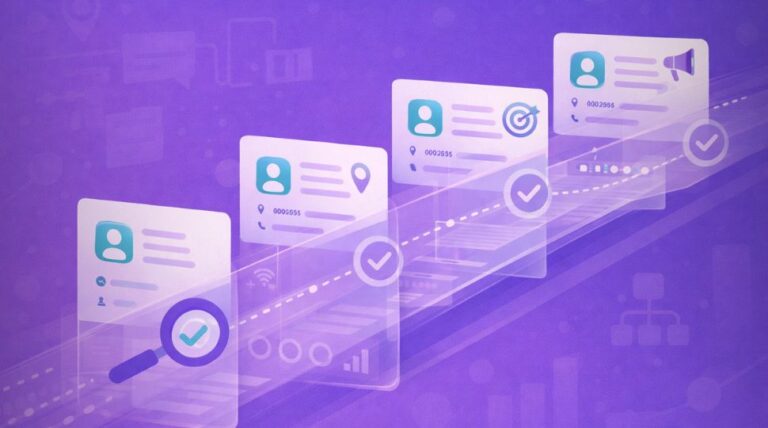
B2B cross marketing combines profiled business data, corporate social signals, cold email sequences and automation to create more relevant and measurable outbound campaigns. Bancomail supports accurate targeting, while MailSenpai and Zapier help coordinate follow-ups, sales workflows and campaign signals without turning multichannel outreach into noise.
B2B Cold Outreach Cross Marketing: How to Coordinate Email, Social Data and Automation Without Creating Chaos
In B2B cold outbound, there is a familiar temptation: take a contact list, upload it to a platform, prepare an email sequence and wait for something to happen.
Sometimes it works. More often, it performs below its potential.
Not because email is dead, a claim that survives more easily in provocative posts than in real campaign data. The issue is that a B2B buyer does not operate inside a single channel. Buyers research suppliers, read content, visit websites, review LinkedIn activity, compare credibility signals and only then decide whether to reply, ignore the message, save it for later or forward it to a colleague.
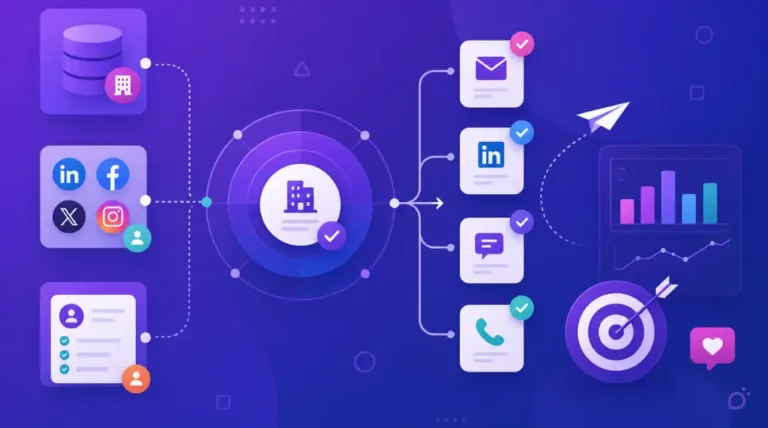
This is where B2B cross marketing for cold outreach becomes useful. It is not about being everywhere or adding channels for the sake of it. It is a method for coordinating touchpoints around richer, more structured business data.
For Bancomail, the starting point is simple: a list should not be reduced to a column of email addresses. A well-structured B2B email database can include company identity, contact details, website, phone number, corporate social profiles, industry classification, location, company size, financial indicators and other segmentation attributes. This means understanding not only who to contact, but also what kind of company it is, which market it operates in and which channels may support a more relevant approach.
With MailSenpai, Bancomail’s email marketing partner, these data points can be activated through cold email sequences, follow-ups, segments, automation, testing and Zapier integrations. The goal is not a louder campaign. It is a more coherent one.
What is cross marketing in B2B cold outbound?
Multichannel marketing, omnichannel marketing, cross-channel marketing and cross marketing are often used as interchangeable terms. For B2B cold outreach, however, the distinction matters.
A multichannel campaign uses several channels, such as email, LinkedIn, retargeting and sales calls.
A cross marketing campaign makes those channels work together. It connects signals, messages and timing instead of adding random touchpoints.
A simple workflow might look like this:
- select B2B software companies with 10-50 employees;
- identify businesses with an active website and a visible LinkedIn presence;
- send an initial email focused on a specific operational problem;
- move contacts who open or click into a more targeted follow-up sequence;
- use a lighter reminder or a manual sales step for contacts who do not engage;
- synchronise relevant prospects with a CRM, pipeline or operational tool through Zapier.
This is the difference between sending emails and building an outbound system.
The distinction is crucial in cold outreach because these contacts have not completed a form, downloaded a guide or requested a demo. You are opening a conversation. When a conversation starts cold, relevance matters more than raw volume.
Why social data changes how a B2B list should be used
Corporate social data, when available, should not be treated as permission to contact the prospect on every platform. That is the first mistake to avoid.
The main value of social profiles in a B2B database is contextual.
A LinkedIn, Facebook or X profile can help indicate whether a company communicates regularly, maintains an active digital presence, publishes content, attends events, recruits staff, launches services or appears largely inactive. These signals are not always decisive, but they can help establish priorities.
Two companies may belong to the same industry, operate in the same market and have a similar size. Yet one may have a current website, active LinkedIn content and visible growth signals, while the other has an outdated domain and no recent digital activity. They may not deserve the same message, timing or level of sales attention.
This is the key point: social data is not only another channel. It improves how the target is interpreted.
The same principle applies to structured industry data. Using a consistent SIC and NACE industry classification makes it easier to distinguish broad markets from specific business activities and build messages around the prospect’s real operating context.
From contact data to business context
Traditional cold outbound is often reduced to a linear sequence:
company – email – send – follow-up.
A cross marketing approach expands the logic:
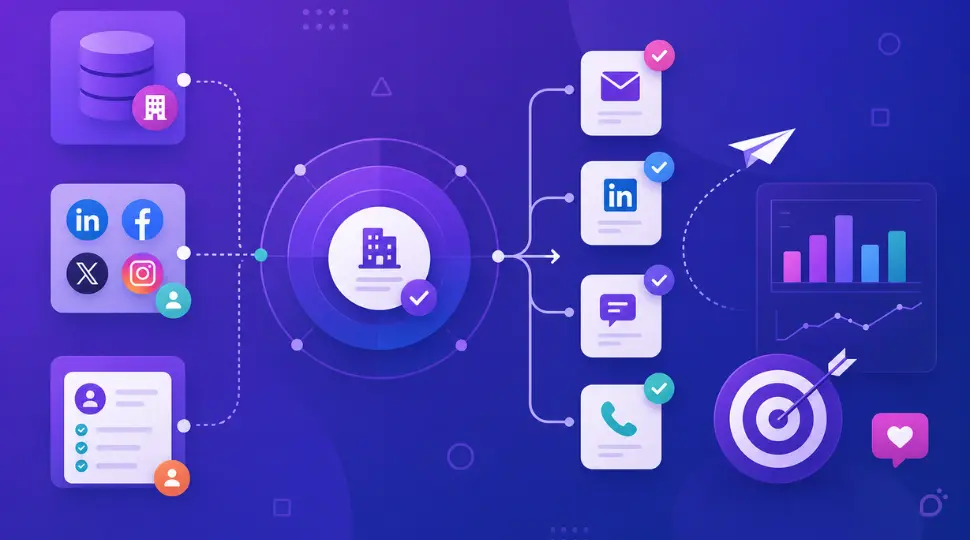
company – profile – available channels – message – sequence – automation – feedback.
This may sound theoretical, but it changes practical campaign decisions.
If a company has a strong ecommerce presence, the message might focus on conversion, lead management, customer retention or post-purchase automation. If its LinkedIn activity is central to its public positioning, the copy can reflect the themes the company communicates openly. If it belongs to a highly specific subcategory, the outreach can avoid generic language and address a recognisable operational issue.
The advantage is not only creative. It is technical.
The more structured the data, the easier it becomes to create clean segments. The cleaner the segments, the easier it is for MailSenpai to run coherent workflows. The more coherent the workflows, the more useful the campaign reports become.
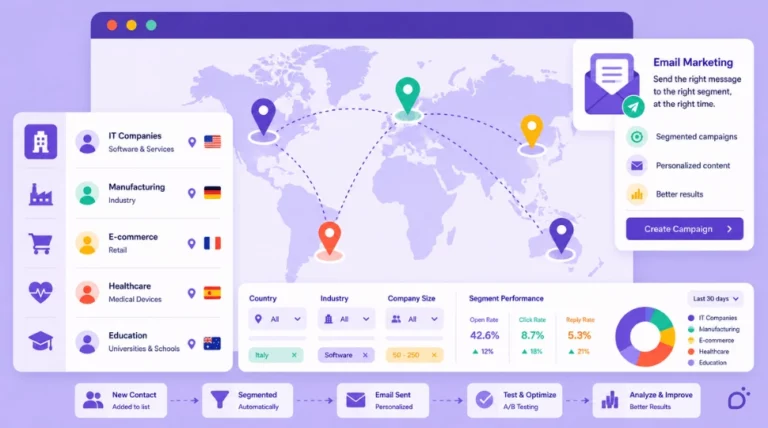
If the same message is sent to 10,000 very different businesses, the report will only show that something worked or did not work. Segment-based outreach reveals which industries respond, which messages generate qualified clicks, which follow-ups start conversations and which targets should be excluded or redesigned.
Why B2B cross marketing matters even more in 2026
B2B buyers are increasingly digital, but not necessarily more available.
Research cited in the original analysis shows that B2B buyers use many channels throughout the purchasing journey and expect consistency across interactions. It also indicates that irrelevant outreach actively pushes prospects away from suppliers.
That finding should sit above every cold outreach dashboard.
The problem is not contacting a prospect. The problem is contacting them without a clear, relevant reason.
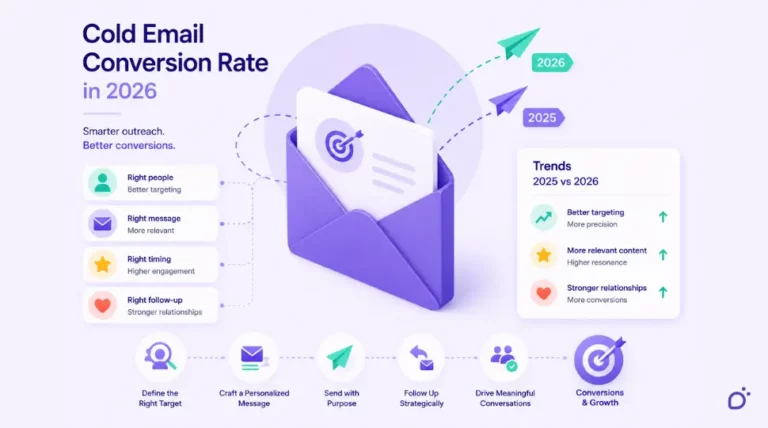
A well-designed cross marketing campaign does not try to surround a contact from every direction. It builds a sequence of coherent signals. First it defines the segment. Then it sets the message. Next it chooses the primary channel. Other touchpoints are added only when they have a clear role.
In B2B cold outreach, more channels do not automatically create more results. Greater coherence often does.
How Bancomail supports the process with data beyond email
Bancomail builds profiled B2B email lists for email marketing, lead generation and sales outreach. Email, phone number, address and website are the most visible contact fields, but the operational value of a list increases when those fields are connected to segmentation attributes.
Depending on coverage, records may also include corporate social links such as Facebook, LinkedIn and X, together with revenue bands, employee ranges, industry classification and other parameters used to create more precise audiences. A B2B dataset sample helps teams review the structure and available fields before planning an import or campaign workflow.
This means the database can support much more than a simple email export.
It can be used to:
- identify companies with a more developed digital presence;
- separate businesses with websites, ecommerce activity or social profiles;
- create different messages by industry, company size or market;
- prioritise sales activity around the most relevant prospects;
- prepare cleaner imports for sending platforms, CRMs and automation tools.
Data quality also affects everything that follows. Reviewing data validation and warranties is therefore part of campaign planning, not an administrative detail added after the list has been selected.
Data alone, however, is not enough. It needs an environment where it can be activated.
How MailSenpai supports sequences, deliverability and automation
MailSenpai turns profiled data into campaign actions. In a cold outreach workflow, its role goes beyond sending a single email. It supports sequences, follow-ups, automation, A/B testing, warm-up, deliverability management and the technical setup required to scale progressively.
This matters because cold outreach is never only about copywriting. It also depends on list hygiene, domain reputation, sending pace, bounce management, signal monitoring, testing and disciplined performance analysis.
A rich list loaded into a weak platform may be wasted. An advanced platform supplied with poor data may automate the wrong decisions. The combination works when both sides are aligned: profiled data on one side and technical orchestration on the other.
MailSenpai can also connect with Zapier, allowing email activity to trigger actions across many business applications. This makes cross marketing workflows easier to organise and reduces repetitive manual steps.
Zapier as the bridge between cold email and other tools
Zapier is a no-code connector that allows applications to exchange data through automated workflows known as Zaps. In practice, an event in one platform can trigger an action in another.
In a Bancomail and MailSenpai workflow, Bancomail provides the profiled B2B segment, MailSenpai activates the cold email sequence and Zapier synchronises relevant campaign events with other tools.
Examples include:
- creating a CRM record when a prospect clicks a high-intent CTA;
- notifying the sales team in Slack when a contact replies;
- adding a qualified lead to the correct sales pipeline;
- moving non-engaged contacts into a lower-frequency nurturing list;
- updating a shared reporting sheet when a specific industry starts generating interest.
The benefit is that cross marketing no longer depends on an Excel file filled with manual notes. It becomes a connected system.
There is no need to automate every decision. In fact, automating everything is one of the quickest ways to lose control. Automation is most valuable when it handles repetitive, measurable and clearly defined steps, while sales judgement remains human.
Example 1: cold outreach for a B2B SaaS platform
Consider a company selling workforce scheduling software. Its target might include private healthcare groups, multi-location retailers, home care providers and other organisations with large operational teams.
With Bancomail, the company could segment prospects by industry, territory, employee range and, where available, website and corporate social data. For an English-language campaign, separate segments could be built for US states, UK regions or other priority markets without mixing different commercial contexts into one message.
The first segment might prioritise businesses with stronger digital signals, such as a maintained website and active LinkedIn presence. The opening email could use a practical angle:
“We prepared a short example showing how multi-site teams can reduce scheduling errors and administrative time.”
Contacts who open or click can enter a more specific use-case sequence. Non-engaged contacts can receive a lighter follow-up with a different subject line. Replies can be synchronised through Zapier, added to the CRM and assigned to the appropriate sales representative.
In this scenario, social data is not used to chase the prospect on LinkedIn. It helps identify which companies appear more active, which deserve higher priority and which message is likely to feel credible.
Example 2: marketing agency outreach to B2B ecommerce companies
Now consider a marketing agency offering advertising and conversion rate optimisation services to B2B ecommerce businesses.
The target should not be defined as companies with an email address. A useful segment could combine industry, market, ecommerce presence, company size and corporate social activity.
The sequence might be structured as follows:
- First email: a concise insight about a specific issue, such as qualified traffic that does not convert.
- Second email: a short audit or industry checklist.
- Third email: a practical case study or benchmark.
- Fourth touchpoint: an invitation to a short call, reserved for companies that clicked or showed another strong signal.
MailSenpai manages the sequence and follow-ups. Zapier sends relevant interactions to the CRM or a shared reporting sheet. The sales team does not chase every record equally. It starts with the strongest signals.
This is cross marketing applied to cold outreach: not increasing pressure, but improving priority.
Example 3: when a sales call follows an email
Many companies treat cold calling and cold email as alternatives. They often work better when they are coordinated.
A sales call with no context is difficult. A call made after an email reply, a meaningful click or another qualified signal has a clearer starting point.
Applicable laws, preferences and sound commercial judgement must always be respected. Operationally, however, the principle is straightforward: email opens the context, the phone becomes useful when there is a relevant signal, the CRM records the outcome and the sequence adapts.
Cross marketing does not mean sending an email and then calling everyone. It means using evidence to decide who to call, when to call and which topic to raise.
How to prevent cross marketing from becoming multichannel spam
Cross marketing can be powerful in cold outreach, but it becomes risky when every available channel is treated as another opportunity to apply pressure.
The first rule is simple: every channel needs a function.
If the first email introduces the problem, the follow-up should not repeat the same message with slightly different wording. If LinkedIn is used for context, it does not automatically need to become a messaging channel. If a phone call is added, it should have a clear commercial reason. If Zapier automates a step, it should simplify the workflow rather than create operational noise.
A responsible campaign should follow at least five principles:
- Segmentation before copy: the message comes from the target, not the other way around.
- Progressive scaling: start with controlled volumes and expand only after reviewing the signals.
- Consistency: each touchpoint should support the same value proposition.
- Measurability: every action should produce interpretable data.
- Respect: a contact who shows no interest should not be pursued indefinitely.
The objective is not to be everywhere. It is to be relevant where it matters.
Which metrics matter in a cold cross marketing campaign?
Traditional cold campaigns often focus on open rates, click-through rates and replies. Those metrics are useful, but they are not enough to evaluate a connected outbound workflow.
Teams should also review:
- performance by segment;
- positive reply rates by industry or business category;
- qualified clicks compared with low-intent clicks;
- average time from first contact to response;
- conversion from email interaction to sales opportunity;
- follow-up effectiveness compared with the first message;
- unsubscribe and exclusion rates by segment;
- the quality of the conversations generated.
This shifts analysis from a single send to the behaviour of the target audience. The original data becomes central again: a well-profiled database makes it possible to understand which clusters respond best.
With flat data, analysis remains vague. A campaign may produce a 2% click rate, but the team still knows too little about why it happened or which companies created the result.
A practical Bancomail and MailSenpai workflow
A realistic operating process could follow these steps:
- Define the target: choose industry, territory, company size, business characteristics and relevant digital signals.
- Prepare the Bancomail list: export the fields required for segmentation, including corporate social data where available.
- Clean the campaign plan: establish segments, exclusions, priorities and message angles.
- Import into MailSenpai: upload the database and organise contacts into meaningful groups.
- Complete the technical setup: review the domain, warm-up, sending parameters and deliverability.
- Build the cold sequence: create the first message, follow-ups, variants and A/B tests.
- Connect Zapier: synchronise qualified clicks, replies or leads with the CRM, Slack, Google Sheets or other tools.
- Analyse the results: compare performance by segment and optimise the next actions.
Each stage should follow logically from the previous one. Do not start with Zapier. Do not start with the template. Do not even start with the sending platform. Start with the target.
The target defines the data. The data defines the segment. The segment defines the message. The message defines the sequence. The sequence determines which automations are useful.
Before scaling volume, teams should activate campaigns progressively and monitor the technical signals. Bancomail’s guide to sending a cold email campaign provides a practical framework for this setup, while the email marketing automation guide explains how to connect triggers, sequences and follow-up actions without losing control.
Compliance and good judgement: the boundary not to cross
When cold outreach uses business and social data, one principle must remain clear: the availability of information does not justify aggressive use.
B2B cross marketing should remain within a framework of transparency, relevance and applicable law. The objective is not to create unsettling personalisation by repeating every detail found online. It is to make the commercial contact more relevant.
For European campaigns, this includes understanding how GDPR-compliant B2B data should be selected and managed. It also means applying clear permission marketing rules, including accurate sender identification, a legitimate and relevant business purpose, appropriate information for the recipient and a simple way to object or unsubscribe.
There is a clear difference between writing:
“I saw that you published a LinkedIn post yesterday at 5:42 p.m.”
and creating a message that reflects the company’s industry, size and level of digital maturity.
The first may feel invasive. The second is simply better-informed marketing.
Conclusion: better cold outreach connects data, channels and decisions
Cold marketing is no longer competitive when it simply sends a large list and waits to see what comes back.
The B2B environment is fragmented, buyers are more independent, channels are more numerous and tolerance for irrelevant messages is low. The value therefore lies not only in the contact record, but also in the context attached to it.
Bancomail provides the starting point through profiled and segmentable B2B databases that may also include corporate social data. MailSenpai turns that starting point into an operational sequence through email, automation, testing, follow-ups, deliverability tools and Zapier integrations.
The strategic work happens between those two layers: deciding which data matters, which channels should be activated, which signals deserve attention and which actions should be automated.
Cross marketing in cold outreach is not about creating more noise. It is about creating more meaning.
Bancomail customers can access a dedicated 20% discount on MailSenpai pay-as-you-go plans and turn profiled lists into more organised, measurable and coherent outbound workflows.

Francesca Grillo
With a hybrid background in visual design, marketing, and product management, Francesca works at Bancomail as Project Manager and Product Owner, leading digital development and lead generation strategies. For over 15 years, she has operated in both B2B and B2C contexts, focusing on email marketing, process optimization, and customer experience. She is part of Bancomail’s internal B2B Marketing Board and actively contributes to the growth of the company’s ecosystem, with a sharp focus on data value and communication quality. Passionate about writing and nonprofit digital projects, she believes in blending technical vision with narrative sensitivity.