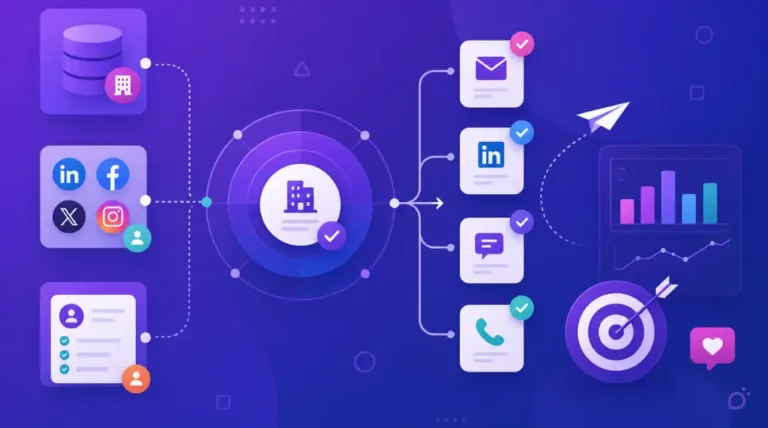
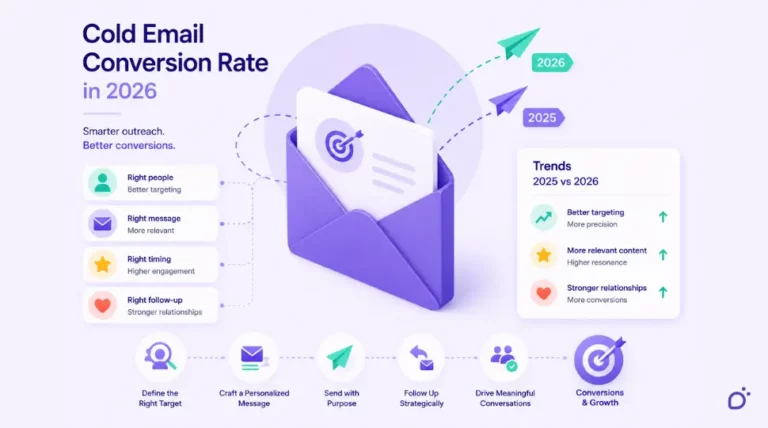
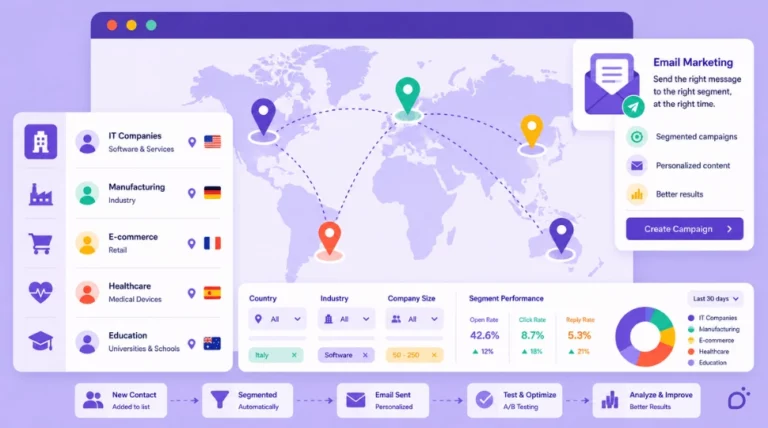
New B2B contacts cannot be treated like a standard campaign: over 60% are not ready to buy and require structured nurturing. An effective flow includes 4 touchpoints over ~15 days (Day 0, 4–5, 9–10, 14–15), with follow-ups driving up to 40% of total replies. Bancomail ensures data quality upfront, while MailSenpai orchestrates timing, segmentation, and automation to maximize ROI.
In B2B, the problem isn’t just finding new contacts.
The real challenge is knowing what to do with them, when to do it, and how.
Purchased lists, contacts newly added to the CRM, “cold” leads who don’t know you yet: this is where a large part of the ROI of an email marketing strategy is decided. And it’s also where the most expensive mistakes are often made.
In this article, we’ll look at how to design campaigns for new contacts in an ethical, effective and measurable way, combining data quality, correct timing and smart nurturing flows.
Why “new contacts” ≠ “standard campaigns”
A common mistake is treating new contacts as if they were already part of your ecosystem. They’re not.
A newly acquired contact:
- doesn’t know your brand
- doesn’t trust you (yet)
- hasn’t expressed direct interest
- isn’t ready to receive a sales proposal
According to several industry studies, over 60% of B2B contacts are not in an immediate buying phase, but can become qualified if guided properly. This means one thing only: before selling, you need nurturing.
This is where the two pillars of the partnership come into play:
- Bancomail → data quality, accuracy and continuous updates
- MailSenpai → intelligent orchestration of email flows
Cold acquisition: method before message
In B2B, sooner or later every organization faces the same need: to grow, it must engage with companies that don’t know the brand yet. This is a natural dynamic. Even with a well-structured website, a solid offer and an effective inbound strategy, new decision-makers don’t always land on your channels spontaneously. In many cases, the company has to make the first move.
This is where cold acquisition comes in. But the moment you email someone who has never heard of you, you’re asking for attention – and in B2B, attention is scarce. If you can’t clearly demonstrate why you’re writing to that company, that role, at that specific moment, the issue won’t be the copy. It will be the upstream strategy.
At this point, data stops being just a “list of email addresses” and becomes a real strategic asset. An up-to-date, verified contact placed in a coherent context reduces friction even before the message is opened. It doesn’t guarantee a reply, of course, but it gives you a head start.
This is the role Bancomail plays in the acquisition cycle: reducing uncertainty before sending. Knowing that you’re reaching an active company, operating in a sector aligned with your offer, with technically valid data, completely changes the kind of campaign you can afford to run.
From here, GDPR also takes on a different meaning. No longer an abstract constraint, but a very concrete operational framework. In B2B, contact legitimacy doesn’t come from a legal formula, but from relevance. If the message makes sense to the recipient, is clearly professional, doesn’t force an immediate sale and always leaves room to opt out, cold acquisition stops being intrusive and becomes simply… professional.
Timing: when to write (and when not to)
One of the most delicate aspects of a cold campaign is timing.
Some average B2B benchmarks:
- emails sent within the first 3–5 days after acquisition perform better
- Tuesday and Thursday remain the most stable days
- well-calibrated follow-ups can generate up to 40% of total replies
But beware: there’s no “perfect day” without the right context.
The real question isn’t when to send, but:
“What kind of message makes sense at this stage of the relationship?”
Example of a nurturing flow for new Bancomail contacts
Once the contact is accurate and properly segmented, the real competitive advantage is not treating it as a one-shot action, but as a journey.
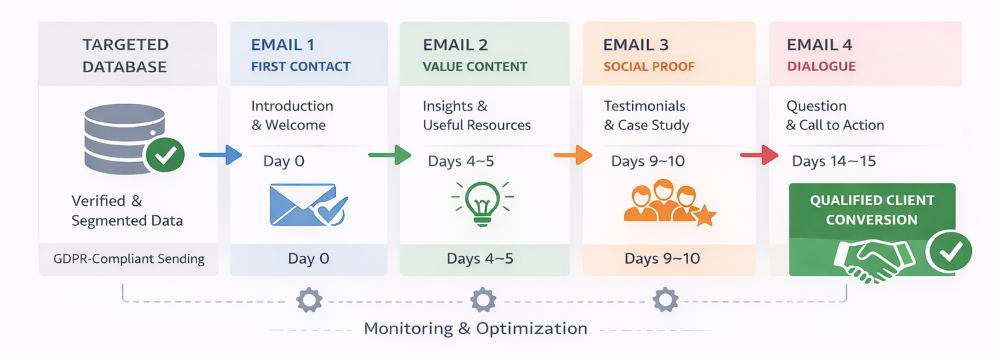
A flow like this, if managed manually, quickly becomes complex: timing to respect, message variants, signals to interpret. This is where a platform like MailSenpai makes the difference – not by oversimplifying the process, but by making it governable.
Email 1 – First contact (Day 0)
- short
- contextual
- zero sales pressure
Goal: be recognized, not sell.
At this early stage, message design matters as much as structure. With MailSenpai, the first contact isn’t tied to a rigid format: you can work with minimal, almost one-to-one emails or more structured messages, while always keeping control over rendering across different clients via the visual editor.
This makes it possible to test different approaches without compromising overall flow consistency.
Email 2 – Value (Day 4–5)
- insight
- data point
- real mini-case
Goal: demonstrate competence.
This is where segmentation becomes truly useful – not just as an initial split, but as a tool to modulate content throughout the journey. In MailSenpai, segments can evolve based on available data and recorded interactions, allowing you to adapt depth without rewriting the entire flow each time.
Email 3 – Soft social proof (Day 9–10)
- who already works with you
- what problem you solved
- no aggressive CTA
Goal: reduce distance.
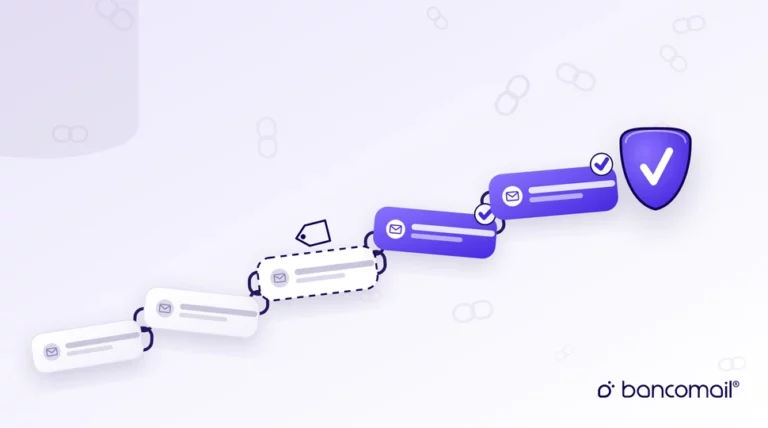
After the previous message, the biggest risk is losing context. Here automation plays a different role: it doesn’t push the contact forward at all costs, but helps manage what actually happens. In MailSenpai, replies, interactions and even non-responses are recorded as events, making it possible to decide whether to continue, pause or adjust the journey.
Email 4 – Opening the dialogue (Day 14–15)
- simple question
- light call to action
Goal: understand real interest.
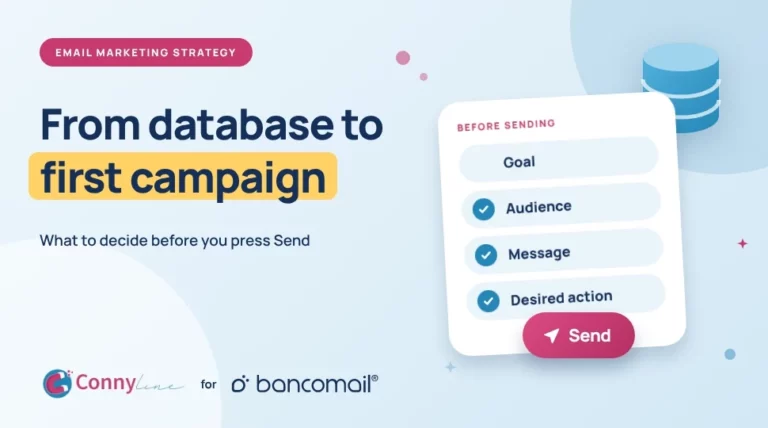
As flows grow, the challenge isn’t sending more, but maintaining order. MailSenpai allows you to centralize sending rules, suppression logic and exclusion lists, reducing the risk of overlaps or unwanted contacts. This is especially relevant with new-contact journeys, where control is part of channel sustainability.
Follow-up: where ROI is decided
Follow-up isn’t pressure – it’s the correct way to resume a paused conversation. Some useful stats:
- 80% of B2B conversions happen after at least 3 touchpoints
- the first follow-up can increase replies by 20–30%
- over 60% of sales teams stop after the first attempt
Automating follow-ups intelligently means:
- forgetting no one
- avoiding intrusiveness
- adapting the message to real behavior
When the flow becomes a system: automation and personalization
A contact cycle like the one described truly works only when it stops being a static sequence and becomes an adaptive process, able to react to what the recipient does – or doesn’t do.
Operationally, this approach is enabled by a platform that goes beyond sending. With MailSenpai, you can design email sequences through a visual editor, combining messages, timing, conditions and temporal logic without touching code.
This makes it possible to keep control even as the number of contacts grows, preventing nurturing from turning into a set of manual actions that are hard to manage over time.
Automation ensures that every new contact enters the same quality perimeter: same timing, same logic, same respect for the journey. No improvisation, no forgotten follow-ups, no forced acceleration.
The next step is segment-level personalization. Even within the same market, companies are not all at the same stage. Treating them uniformly means losing relevance. A well-designed flow accounts for these differences, adjusting content, depth and rhythm based on context, not rigid sequences.
The most advanced level is behavior-based optimization. Opens, clicks and replies – but also the absence of interaction – are signals that help determine whether the message arrived at the right time. An effective system doesn’t treat them as vanity metrics, but as indicators to decide what to do next: continue, pause or change approach.
KPIs to monitor
Forget isolated vanity metrics like open rate. With new contacts, the KPIs that really matter are:
- reply rate
- quality of replies
- average time to conversion
- unsubscribe rate (early warning sign)
- ROI by segment
Only this way can you understand whether the flow works or needs adjustment.
When Bancomail and MailSenpai work together
The real advantage of the partnership is this:
- Bancomail reduces risk upstream
- MailSenpai multiplies value downstream
The combination of reliable data at the start and a platform capable of managing structured flows at scale makes cold acquisition more sustainable. It’s not about sending more emails, but about improving the overall quality of the process.
🎯 Exclusive benefit for Bancomail customers
If you’re already a Bancomail customer, you can access an exclusive 20% discount on MailSenpai, designed specifically to build effective nurturing flows for new contacts.
👉 Discover the shared Bancomail × MailSenpai landing page and request your dedicated access.
Because real ROI doesn’t come from sending. It comes from what happens next.